
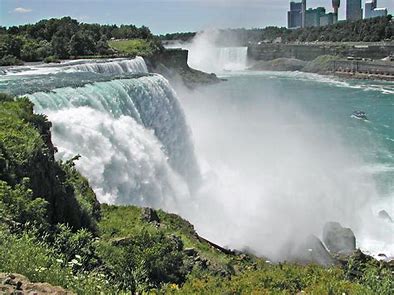
When was the last time you saw, felt, smelled, or did something that left you speechless and made your heart soar and your brain do a happy dance? When did you last experience awe? I bet your mind is now going to your latest vacation or flipping back through the major events and milestones of your life. Stop right there! It doesn’t have to be something big. Awe can be experienced at any time, in any place, and in any way. It depends on your perspective and openness to letting awe into your life.
Feeling awe at the relatively smaller things in life is a somewhat new concept. It was once thought that awe was only spiritual in nature. That it could only be experienced by massive transformation or religious revelation. But over time, that concept morphed to include things more accessible in our everyday lives.
In my third blog, I’m Grateful For . . . published on August 10, 2021, I briefly mentioned The Book of Awesome by Neil Pasricha. He has done some awesome work about awesomeness, including several books, a blog, a podcast, etc. Visit his website for more inspiration.
It turns out that awe is serious business. Just the other day, I listened to an interesting previously recorded interview on CBC’s Tapestry about the emotion of awe. Tapestry was a CBC radio program that featured documentary and interview programming relating to spirituality, religion, philosophy, and psychology. Unfortunately, the final episode was broadcast on December 31 as host Mary Hynes retired. As most of the interviews on Tapestry do, this one got me thinking.
Why is awe such an important emotion? Research shows that it can lower stress by making us happier and more satisfied. It causes us to question our existence and our place in the universe, which, in turn, makes us feel more connected to others. This can happen in a split second; it’s not like you see a majestic snow-covered mountain and sit down to philosophize. Seriously, try it. Take a deep breath. Close your eyes. Think of something beautiful or exciting and say to yourself, Wow! Let that word reverberate through your being. Doesn’t it make you smile? Doesn’t it make you feel good, even for just a second? Now think of how good that would feel if you were experiencing something awesome in real time. Incredible!
Awe is quite a complex emotion, and it can mean different things to different people. A paper titled The Potential Role of Awe for Depression: Reassembling the Puzzle by Alice Chirico and Andrea Gaggioli, published in 2021 in the National Library of Medicine, states, “Awe is a complex and transformative emotion that can restructure individuals’ mental frames so deeply that it could be considered a therapeutic asset for major mental health issues, including depression.”
A lot of awe happens in nature. Mountains, oceans, icebergs, trees—you know what I’m talking about. So, what Chirico and Gaggioli are saying makes total sense. Health and wellness professionals have started to tout the value of nature for our mental health. Apparently, a mere two hours a week, or 17 minutes a day, is enough for us to reap the benefits. If simply being in nature can have that kind of positive impact on us, it is no wonder something that creates that sensation of awe is like a turbo boost to the system.
The emotion of awe has been attributed to a combination of wonder and fear. Wonder in the beauty of the awe-inspiring experience, and fear in the realization that we are in the presence of something so magnificent that it takes our breath away. It makes us realize how small, yet interconnected, we are as humans. It gives us goosebumps.

As reported in The Awesome Psychology of Awe/Psychology Today, “Awe can be understood as a complex adaptive emotion arising from a combination of fear and wonder. Experiencing awe promotes ethical concern, open-mindedness, pro-sociality, and generosity. We can experience awe not only by encountering something awesome, but through practicing mindfulness.”
There is a lot of data that backs up the statement in Psychology Today. It indicates that awe may be responsible for dismantling the notion of “us versus them”. It may also be a way to manage the abuse of power and narcissism. I don’t know about that. Wouldn’t we all have to experience awe at the same time to have that kind of super reaction? And it would have to last a long time. I’m not sure if hundreds of people traipsing around in the woods together is going to bring world peace. I guess it wouldn’t hurt to try, right? If it is true, I say we try to bottle it and spread it among the masses.
“Wonder is the beginning of wisdom,” said Socrates. Anyone want to go for a walk?
Interesting Reads & Things
Dacher Keltner: Why Awe Is Such an Important Emotion (youtube.com)
Why You Should Experience More Awe – YouTube
How Awe Changes You (youtube.com)
The value of wonder in a despairing world | CBC Radio
What Awe Looks Like in the Brain (berkeley.edu)
The Surprising Power of Seeking a Daily Dose of Awe | Psychology Today
Exploring the powerful emotion of awe: How it can be awe-some and aw-ful | CBC Radio
Health Benefits of Being Outdoors: 8 Ways Nature Can Boost Wellness (healthline.com)
 Wanderings Art
Hello. You’ve nailed the subject. An awesome essay! Neil S.
LikeLike
Thank you! I appreciate that!
LikeLike