
One of the things on my “64 and more things to do” list was to practice my Spanish. Oops. Here I am, in Merida, Yucatan, Mexico, realizing how lost I am. Thank goodness Spanish is my husband’s first language, and I can just stand back and let him be my voice. That is not something I am used to, nor am I comfortable with it. I like to ask people things. I’d love to strike up a conversation with the woman who runs the little shop across from our house, but instead, I sit here trying to get my nerve up to walk across the street. I will eventually. It has only been a couple days.
And it’s not just the inability to converse with the locals. It’s not being able to understand things. How the heck did my iPad suddenly know I was in a Spanish-speaking country? Now all those annoying ads are in Spanish. And Netflix? Spanish. Oh well. More opportunities to practice. Even Alexa in our Airbnb is in Spanish.
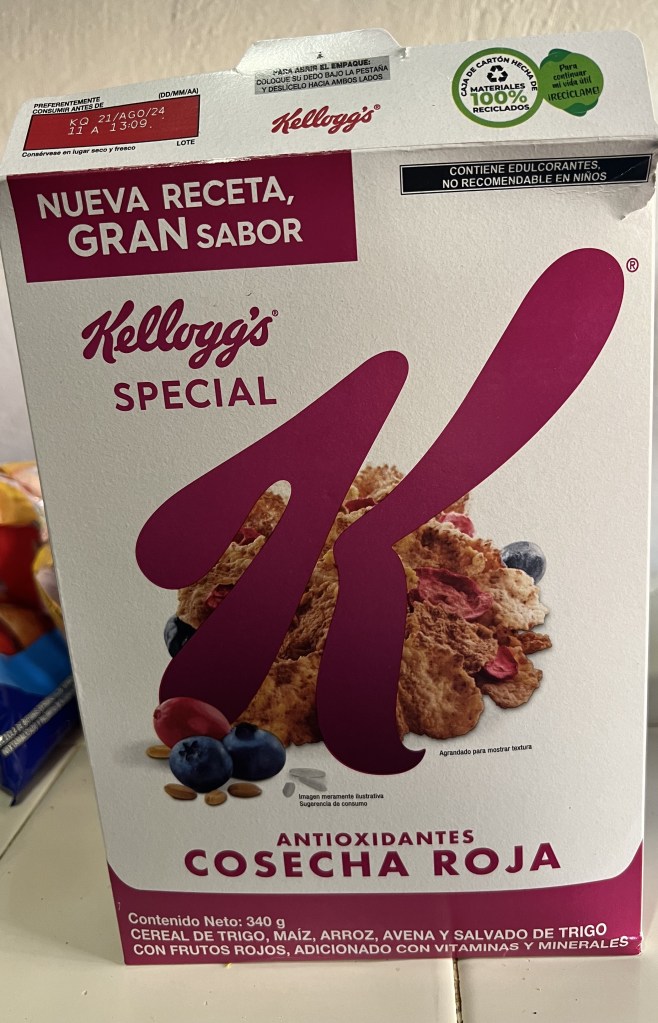
Aside from being unable to freely chat with people, the language barrier creates a lot of frustration. For example, a trip to the supermarket is a nightmare for me. Me trying to find my way around a huge store without knowing what the signs say is like—well, trying to find a needle in a haystack, I suppose. Not that I’ve ever tried to do that. But it is frustrating; it destroys my confidence and leaves me feeling helpless. Even my husband gets confused because the aisles are labelled differently than what we are used to.
For example, mustard, ketchup, and relish. You’d think they’d all be together, right? Nope. We found the ketchup amidst hundreds of bottles of assorted salsa. No mustard is to be seen. After searching nearby aisles, we gave up and chose a relish-type thing. Then on to the produce section. Thank goodness they are self-explanatory. But I need my salad dressing. The hunt is on. Finally, a clerk pointed us in the right direction. “It’s in front of the eggs,” he said (translated). Of course. Why wouldn’t the salad dressing be in front of the eggs? And where are the eggs? Oh yes, beside the chicken. Not the packaged or frozen chicken, but the fresh chicken that is butchered and piled up in the middle of the aisle. Sorry. Not for me. I’ll take the plastic-wrapped stuff. But wait, look! There is the salad dressing. And look, there is the mustard! Yay!
Since we avoid the big stores while we are in Mexico, choosing to shop from neighbourhood vendors, I don’t have to deal with this kind of thing often. And most people, when they hear we are from Canada, immediately feel sorry for us and ask about the weather. I’m pretty good at talking about how cold it is back home. It’s what to say after that.
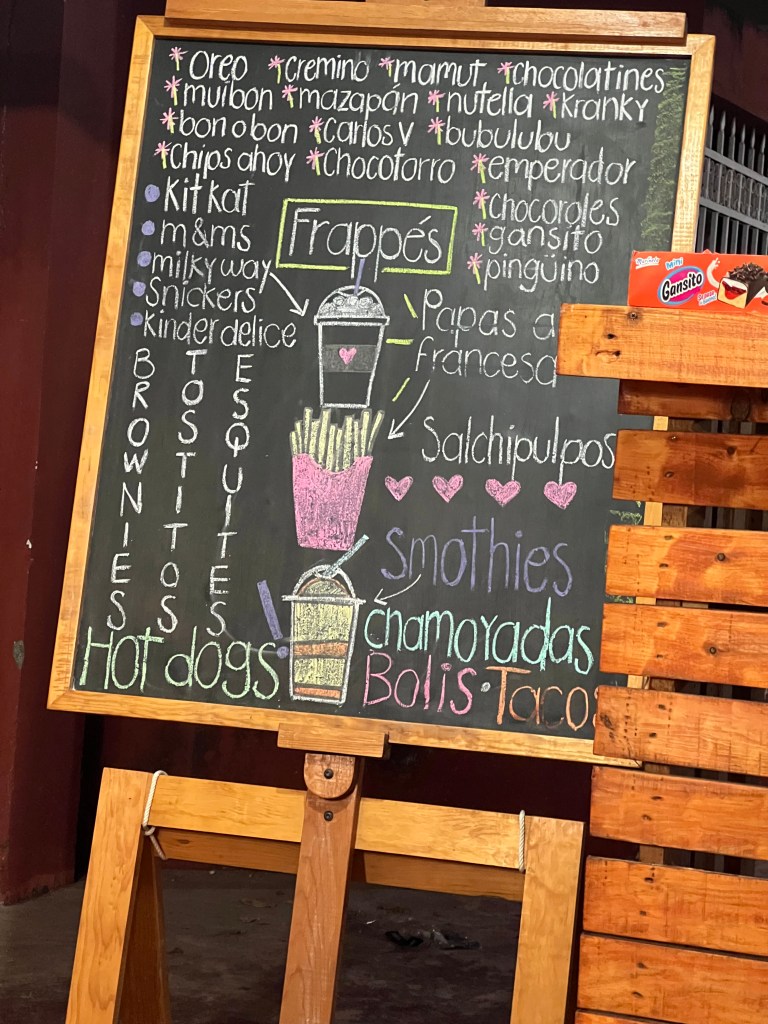
I do realize how lucky I am to have a translator by my side. Not only can he translate the language, but he understands the culture, the directions, the housing utilities, and the money!
Trying to pay for something is another issue I struggle with. I always have trouble with money (LOL) but counting pesos is even harder. How many pesos are in a Canadian dollar? It’s bad enough that I can barely tell the difference between the coins, let alone count out exact amounts and calculate a tip. If not for my husband, I’d be broke, and there would be some really happy servers!
In my years working in the immigration and settlement sector, I met a lot of people learning English. They taught me so many things. For them, learning English was something they had to do to survive in their new home. The more I travel, the more I admire their tenacity, and I really envy those who speak more than one language. For me, learning Spanish is something I should do to show respect to the local community and to make it easier on myself, not to mention less isolating. Functioning in another language daily is more than learning to ask where the bathroom is, order a beer, or utter a simple greeting. Sure, those are important! I suppose it depends on what you want to get from your “out of country” experience.
I think sometimes we forget that not everyone on this planet speaks English, and when we travel, it is up to us to figure out how to communicate. A prime example occurred on one of our flights here. There was an elderly woman seated in the aisle seat behind me. A young fellow approached and asked her to move so he could get into his window seat. She didn’t respond. He asked again, and when she still didn’t respond, he said, “Well, do you want me to climb over you?” She still didn’t say anything, so he did just that. Then the fellow in the middle seat arrived, and the same one-sided conversation ensued. He also ended up climbing over her and into his seat. One guy laughed and said to the other, “Is she alive?” The rest of the flight was uneventful. When we were about to land, the fellow in the middle tried to strike up a conversation with her. To summarize, what he found out was that she was from Brazil and had been in Calgary. Aha! She does not speak English. How brave of her to travel on her own! While trying to get my bag from the overhead bin, I felt a tug on my sleeve. I looked down, and the lady was motioning to me. Then she spoke. Now I had just spent four hours with my headphones on, the plane was very noisy, and her voice was soft and muffled behind her mask. I had difficulty hearing her, let alone understanding what she said. The woman tugged at my sleeve again and pointed up. I said bag and pointed to the overhead bin. She shook her head, no. Then she pointed up again and at the fellow in the middle. That stumped both of us. I shrugged and smiled, and it was my turn to leave. A while later, I saw her again. A flight attendant pushed her in a wheelchair. Aha, again! She must have boarded early because she needed assistance. She didn’t get up to let the young guys pass because she had mobility issues and was unable to communicate that with them. She must have been asking me to tell them to get out first because she needed assistance. I hope those fellows were able to put two and two together and realize that she was not being rude. She simply did not have the English to explain her situation. And they did not speak Portuguese.
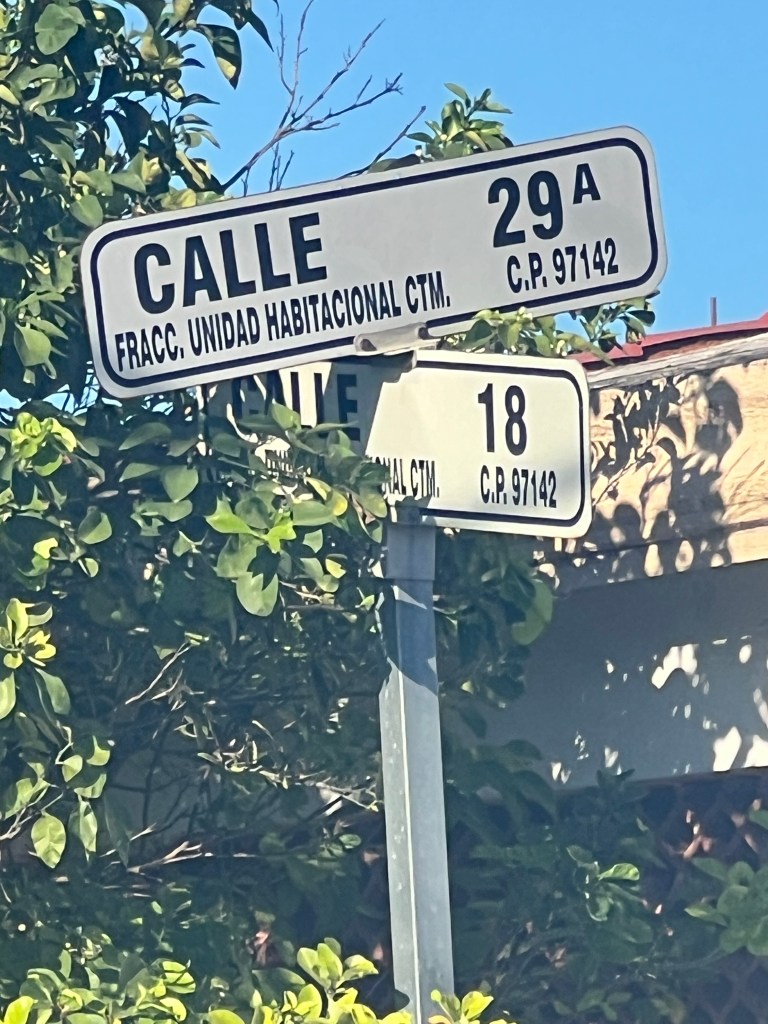
I have found most people quite willing to help me out or try to understand what I am attempting to say. I preface my words with an apology for my poor Spanish. Quite often, I say something, and the person I’m talking to looks at my husband, who then translates to Mexican Spanish. (He is not from Mexico but is familiar with the local slang.) My favourite phrase is ¿Cómo se dice? Or, how do you say? Sure, there are translation apps that are easy to use, but nothing replaces that personal touch. Besides, I’ve seen some translations go horribly wrong.
Well, enough for now. I am going to walk across the street, take a deep breath, introduce myself, and buy a big, juicy, ripe papaya.
Interesting Reads & Things
4 reasons to learn a new language | John McWhorter (youtube.com)
How language shapes the way we think | Lera Boroditsky | TED – YouTube
The Benefits of Learning Languages | Language Connects Foundation
SLM | Seniors Can Benefit by Learning a New Language (seniorslifestylemag.com)
 Wanderings Art