
Sigh. The moon. So big, so beautiful, so bright. It never fails to appear in the night sky. It is a constant, always there to remind us just how small we humans really are on this planet Earth, in this solar system we call home.

The moon has always fascinated me, ever since I first heard the nursery rhyme “Hey, diddle diddle, the cat and the fiddle, the cow jumped over the moon.” I can still see the picture of the cow jumping over the moon in the tattered book of nursery rhymes my mother would read from each night before tucking me in. I remember then, even as a young child, thinking how cool it would be to jump over the moon. Or, at least, to see the moon up close. It’s no surprise that a few years later, I was very excited when Apollo 11 landed on the moon. The famous words of Neil Armstrong still linger: That’s one small step for man, one giant leap for mankind.” Wow, it’s hard to believe that event was 55 years ago. We have come so far since then, yet we still can’t solve the world’s major problems.
Did I want to be an astronaut when I was growing up? Nope. A slight fear of heights, a wee bit of claustrophobia, and very poor marks in all things to do with science and math, put a stop to any of those thoughts. I’ve always been content to just sit and stare out the window at the moon, dream of what it may be like up there, and, of course, write sappy poems with moon-drenched themes.
So you can imagine my excitement when one morning I tuned in to CBC Radio’s The Current and heard Matt Galloway interview Rebecca Boyle, a science journalist and author of Our Moon: How Earth’s Celestial Companion Transformed the Planet, Guided Evolution, and Made Us Who We Are. At the time of that broadcast, the book hadn’t been released. I had to pre-order it!
Boyle’s book was worth the wait. It is not your average scientific exposé of the moon, but rather a collection of information and insights about the moon’s history, its demographics and physical attributes, and most importantly, I think, the role it has played in our lives. Did you know that in 1943, the USA Marines endured the worst casualties in their history during the Battle of Tarawa because of the moon? You can read more about this historic event, but basically, there were plans for the Marines to land on the island in the stillness of night. Unfortunately, the tides did not come in because of the moon’s position, and the boats and Marines were stranded on the coral reefs, becoming easy targets for the Japanese soldiers. Man did not have the technology to predict certain lunar events at that time.
The moon plays an important role in the science of the earth. It also plays an important role in our culture, especially our music: think Glen Miller’s 1939 Moonlight Serenade, Blue Moon by Billie Holliday, 1952, Moon River by Henry Mancini (sung by Audrey Hepburn in 1961), Bad Moon Rising by Creedence Clearwater Revival, 1969, Moondance by Van Morrisson, 1970, Moonshadow by Cat Stevens, 1970 (I absolutely love this tune!), Walking on the Moon by The Police, 1979, and so many more.
Our very existence is influenced by the moon. For one thing, the moon is responsible for our 24-hour days. And, thanks to the moon’s gravity, Earth is stable. Without it, we would be a bit wobbly as we rotated. Can you imagine? The moon’s magnetic field also acts as a shield, protecting us from the sun’s radiation. And it is responsible for much of our weather.
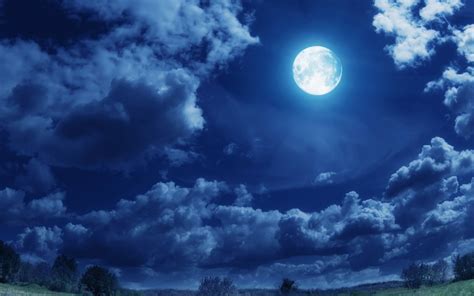
We have the moon to thank for our behaviour—at least some of it. Here’s something I had not thought of: the word lunatic. It is an old word taken from the Latin lunaticus, which means “of the moon.” The moon has been blamed for many things, from werewolves to craziness during a full moon. Even Shakespeare wrote about the bad influence of the moon on man! Many studies have been done, both scientific and non-scientific, linking the moon to menstruation, diet, creativity, energy, migration, and many other physiological occurrences.
If you are shaking your head in disbelief, try charting your emotions starting at the next new moon. The new moon marks the beginning of a new cycle. It’s time to start a new project, set intentions, and make plans. Let go of what you no longer need and concentrate on what fills your soul at the present time.
About a week later, when the moon is “waxing,” you may feel a sudden burst of energy helping you to start working on any new ideas set during the New Moon. You will be reminded (and feel the need) to get going. It’s kind of like a lunar kick in the butt!
Then comes the full moon. This is when intentions set for the new moon start to show. Or at least they should. If they don’t, you will probably wonder why and question your decisions. This is partly why people experience a lot of emotion during a full moon. The full moon is when the intentions you set during the new moon (six months prior) start to manifest.
And finally, two weeks after the full moon, the “waning moon” works its magic. This is when you will see the results of your efforts and reap the rewards, so to speak.
And repeat. The next new moon will be Aug. 5. Get going!
In the five and a half decades since man first landed on the moon, lunar exploration has become big news. It is no surprise, right? I mean, the Russians started it in 1957, and NASA has been sending humans or robots there ever since. It makes me wonder why we are doing this. Perhaps some of that brain power and money should be spent here on Earth, trying to fix the problems we have gotten ourselves into.
Well, even though I decided on this topic many moons ago, this lunar blog only comes around once in a blue moon. I’m over the moon now that I’m finished, and tonight I may find myself baying at the moon for lack of anything better to do.
I’ll leave you with these words from the author of Our Moon.
“One thing I want people to think about is that anything we do to the moon is forever. It has no geology, it has no water cycle, it has no wind, it has no erosion. There’s nothing that will ever change the moon once we start changing it besides us in the future. And so, when we talk about being good ancestors on earth, which is the thing we hear about a lot right now in the climate movement, I want to extend that to the moon. We need to think about who will use it after us, what they will think of it, what they will do with it.” Rebecca Boyle, CBC’s The Current, Jan. 11, 2024.
Interesting Reads & Things
5 Reasons why the Moon is important to Earth – Little Astronomy
https://www.history.com/topics/1960s/moon-landing1969#Timeline%20of%20The%201969%20Moon%20Landing
Ancient Stories About the Moon: Tales of Mystery and Wonder | Meaningful Moon
The Moon Effect: How Does the Moon Affect Humans? (timeanddate.com)
How Tides and Waves Occur | Full Moon Effects – YouTube
Full Moon Magic: The Surprising Powers of Lunar Influence on Animals (youtube.com)
Lunar Cycle, Why The Moon Change Shapes, 8 Phases Of The Moon, Learning Videos For Children – YouTub
 Wanderings Art
Beautiful
LikeLike
Great essay. The Moon is essential to life on Earth.
LikeLike