
This blog is not about colonization. It is not about how the early Europeans came to the Americas and conquered civilizations. It is not about the concept of “God, gold and glory” or the need for more wealth, gold, or trade routes. It is not about the early European’s desire to spread Christianity.
What I would like this blog to be about is the especially important contributions of the ancient Mayan civilization and how much further ahead we may be as a society had we not burnt their books, dismantled their temples, and destroyed their people. Sounds like the results of all historical conquests, right?
But I don’t know enough about the Mayan culture or colonization to write any type of essay with accuracy. I don’t have the inclination to do the research. But I will share a few thoughts and photos, taken during visits to a few of the Mayan ruins in the Mexican state of Yucatán. (A special thank you to our driver/tour guide, and our new friend Nestor for sharing his great respect and knowledge of his Mayan heritage with us. Check him out! Nestor Duran)
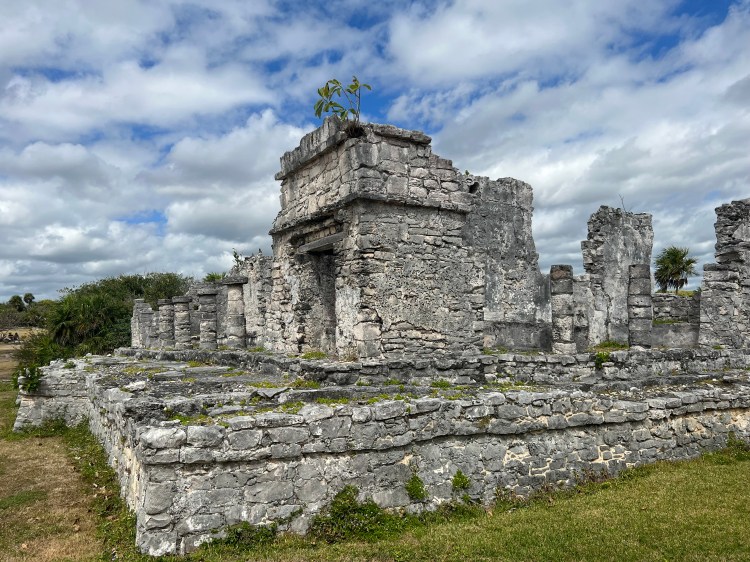
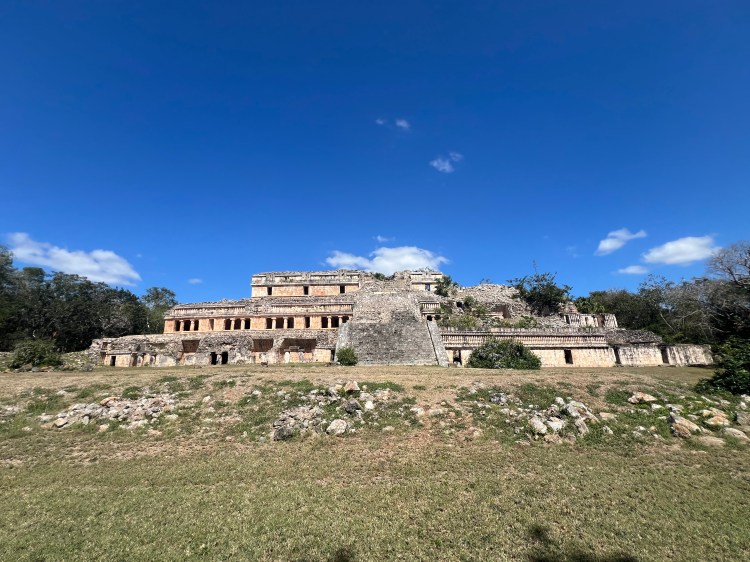
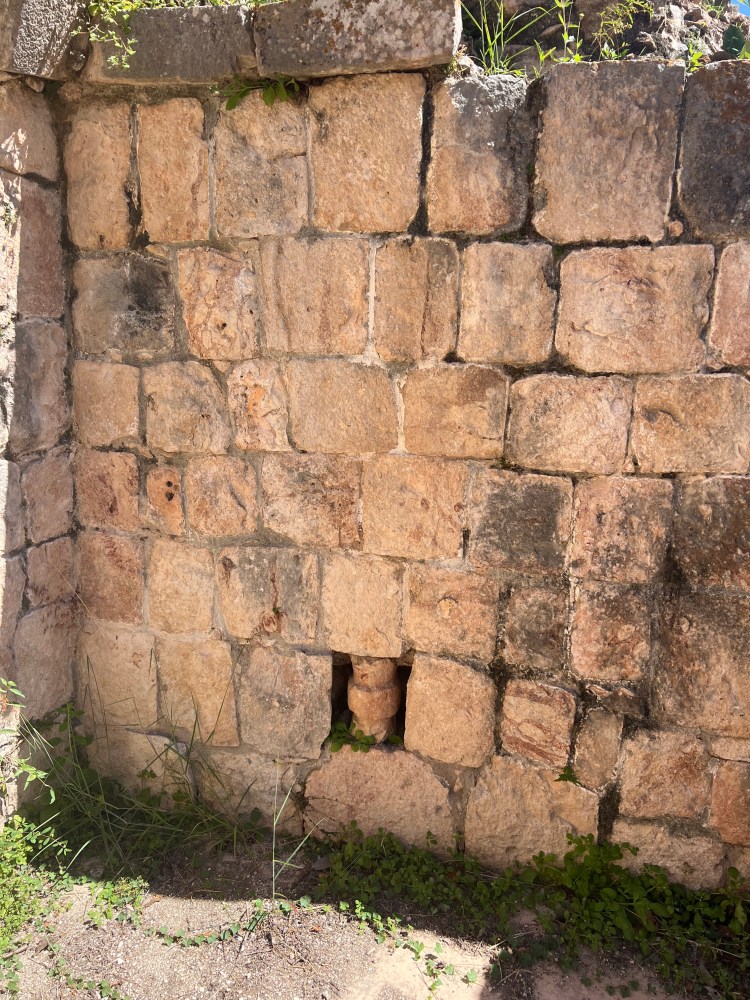
Kabah:UNESCO World Heritage Site; located on Ruta Puuc. 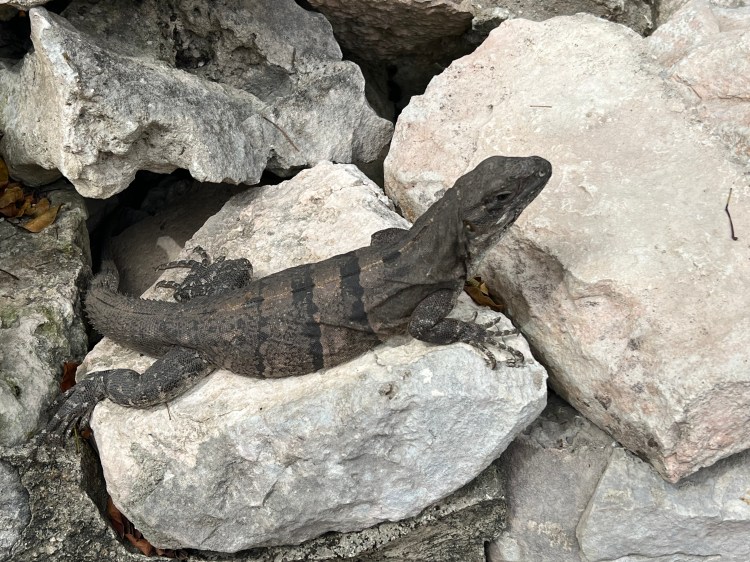
Kabah; these little and (not so little) guys love to sun bathe in the ruins. 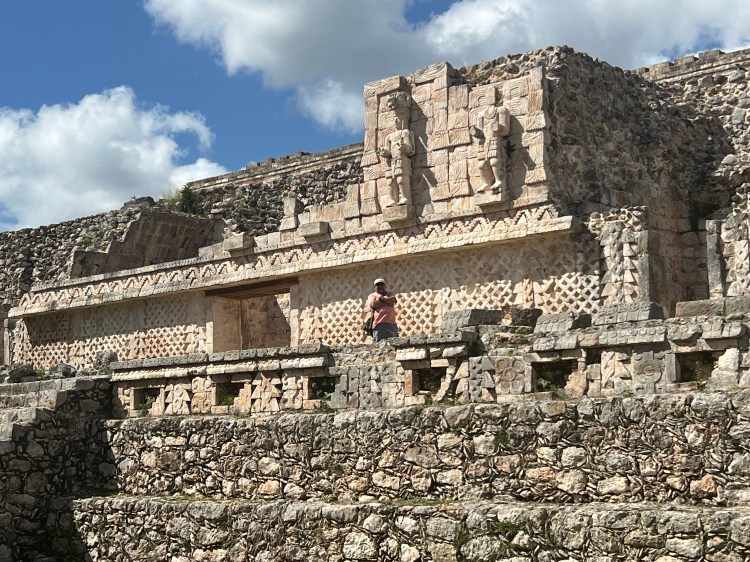
Kabah: my husband, Jose, enjoying the view. 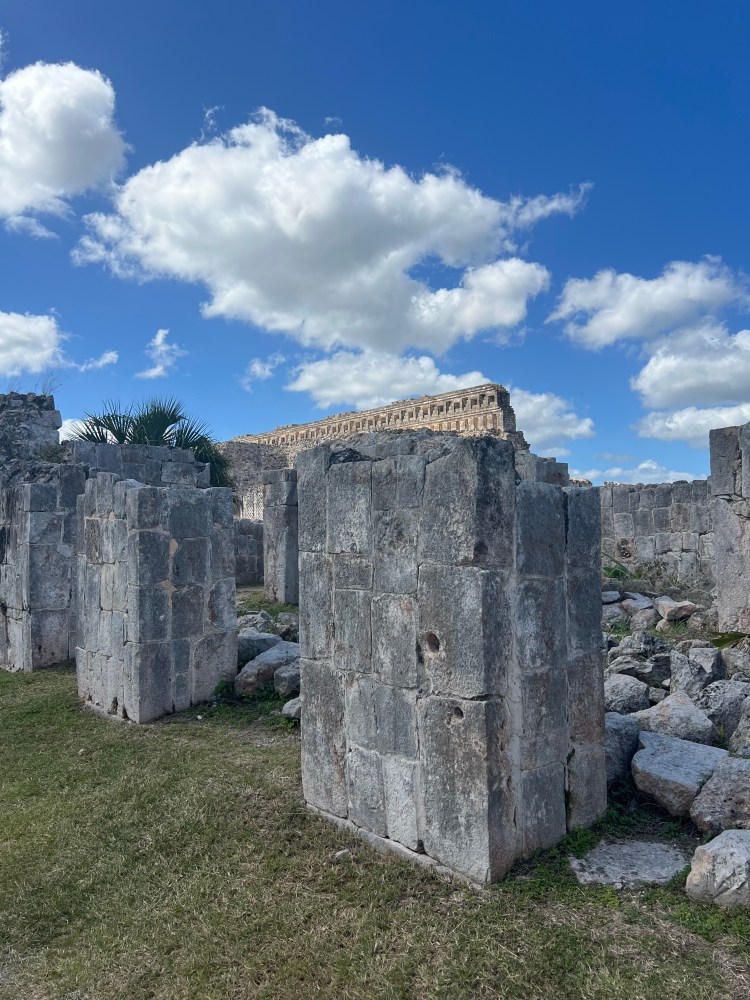
Kabah 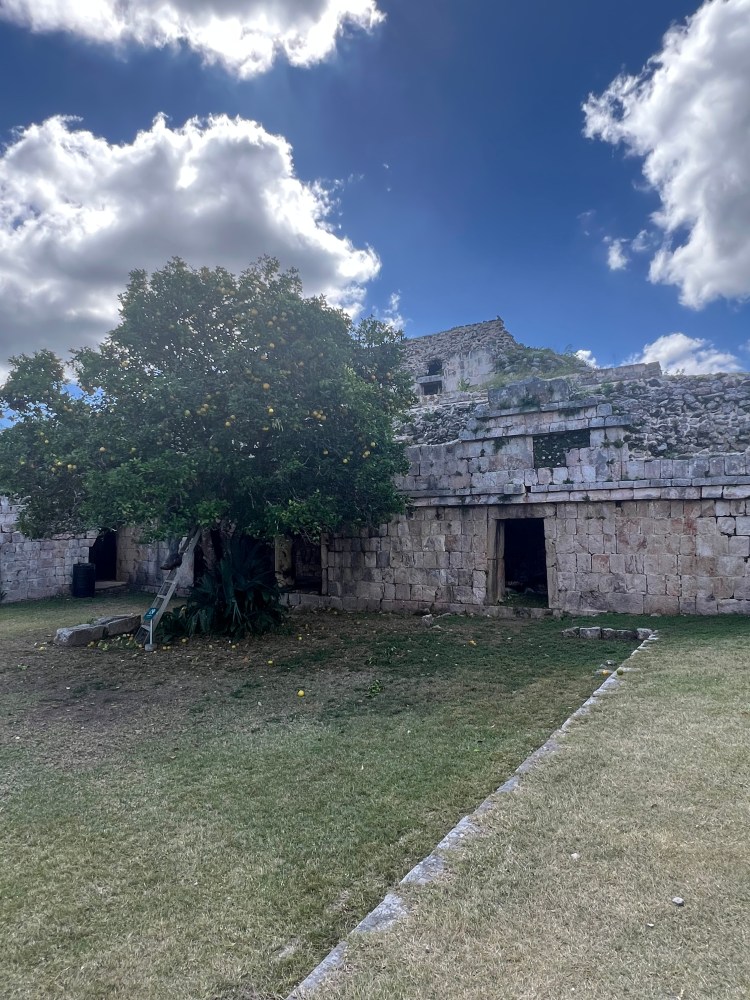
Kabah; look closely underneath this beautiful orange tree. You will see a ladder! Turns out the site’s custodian was picking oranges at that moment. He gave us one to try and shared several stories of the ruins. When we said good-bye, he gave me an orange flower. I’ve never smelled one before and it was so deliciously fragrant. After several days, the flower has wilted but the fragrance is still there! The best way to learn. 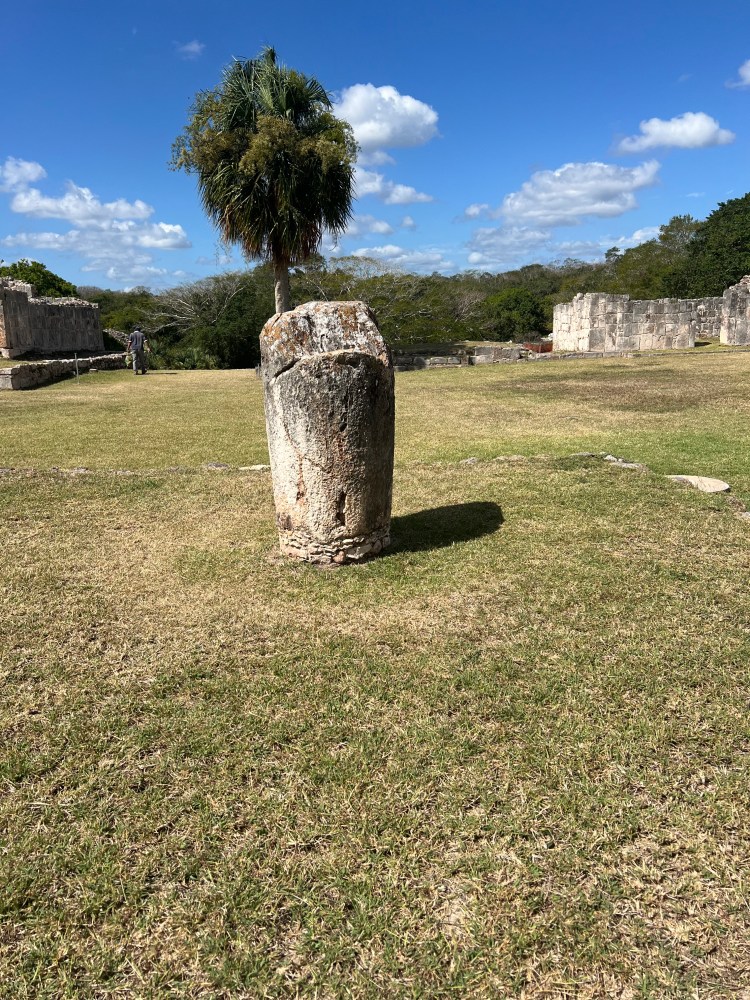
Kabah: execution stone 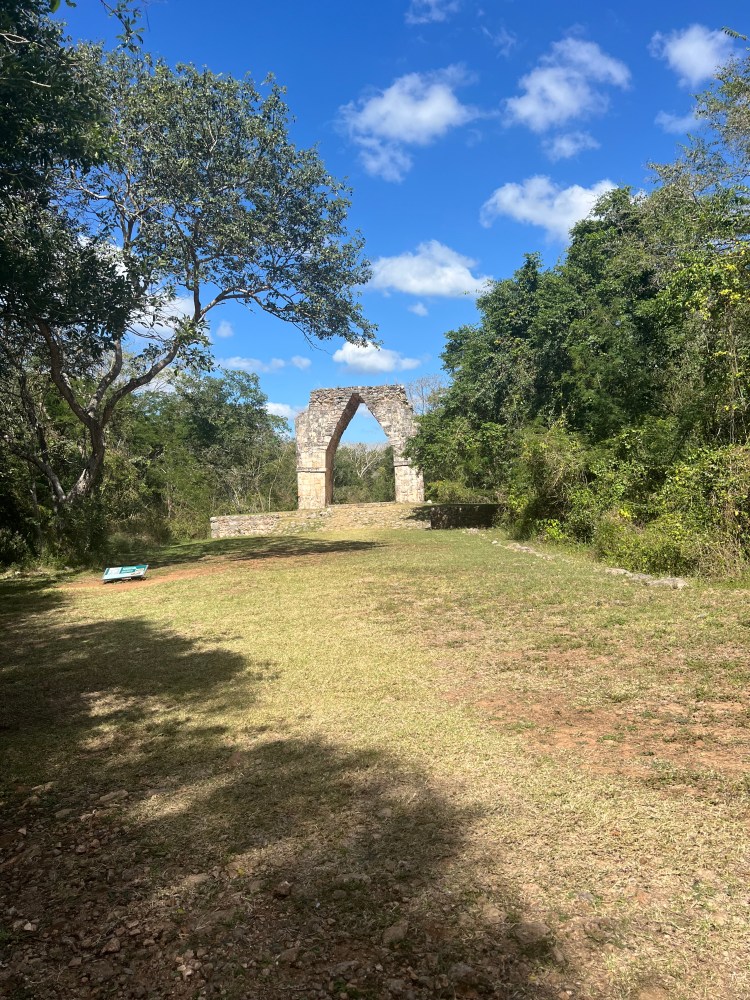
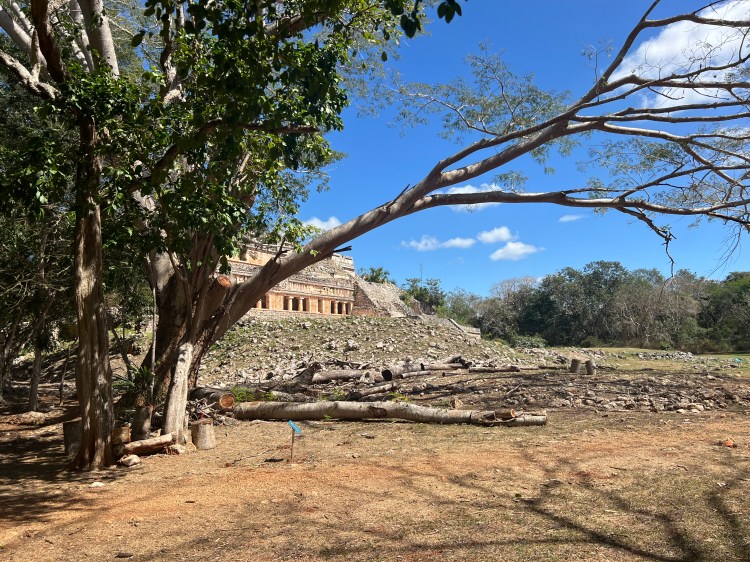
Kabah: this arch marks the road connecting several Mayan towns in the region.
Yucatán is the capital of the Mayan culture. There are about 200 ruin sites open to the public and countless others that are not. The state capital, Merida, embraces its Mayan heritage, and cultural performances, museums, restaurants, and shops are devoted to keeping that heritage alive—not to mention bringing in tourists from all over the world!
The ancient Maya are a fascinating people. They made major achievements in astronomy and mathematics, including a positional numeral system with a concept of zero. This system allowed complex calculations used in astronomy, architecture, and trade.
Their hieroglyphic writing system consisted of logograms and syllabic symbols. They inscribed information on many surfaces, including stone, pottery, and bark paper. In fact, writing on bark paper made it possible to transport and save their knowledge.
I am in awe of the Mayan calendar system. Remember when the world was supposed to end in 2012? I remember people saying that date was based on the Mayan calendar, but what we did not realize was that the calendar didn’t end; it just changed. No end of the world there, folks! The Mayans had four calendars. One was a 260-day record used for religious ceremonies and divination. (260 days = 9 months!) Another was a 365-day calendar used for agricultural and civil purposes. The third was a Long Count calendar, which recorded historical events over extended periods of time. These three calendars combined to form the Round Calendar. Dates were determined by their position on the calendars. There were 18,980 different combinations used to identify the day in a 52-year cycle.
The Mayans were skilled astronomers who calculated the cycles of the sun, moon, and planets. This knowledge, plus their advanced mathematical abilities, led to very precise construction in their monumental architecture. These skills helped with urban planning. They constructed city-states, each functioning as an independent centre and characterized by massive architecture. You can see remnants of those temples, pyramids, palaces, ball courts, and plazas in the ruins of Yucatán. They also built sophisticated drainage systems to manage water flow and avoid flooding.
It is fascinating to see how the windows and doorways of many structures were built to align with events such as solstices and equinoxes. For example, during some celestial events, sunlight or moonlight would shine through a window, highlighting a particular area of a temple. How precise is that?
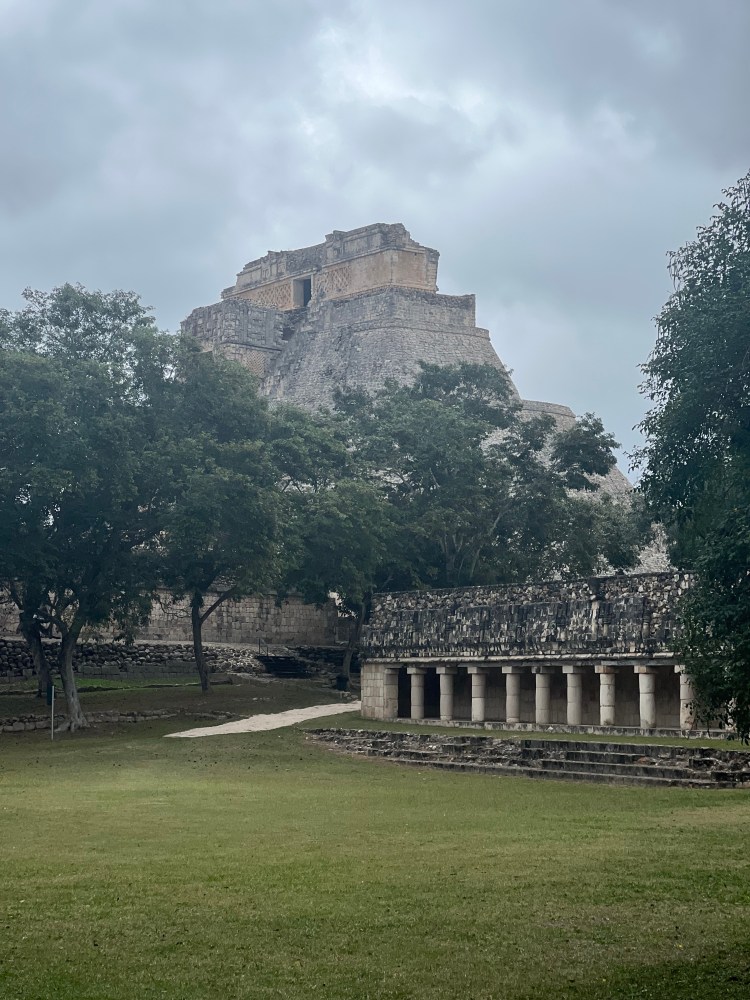
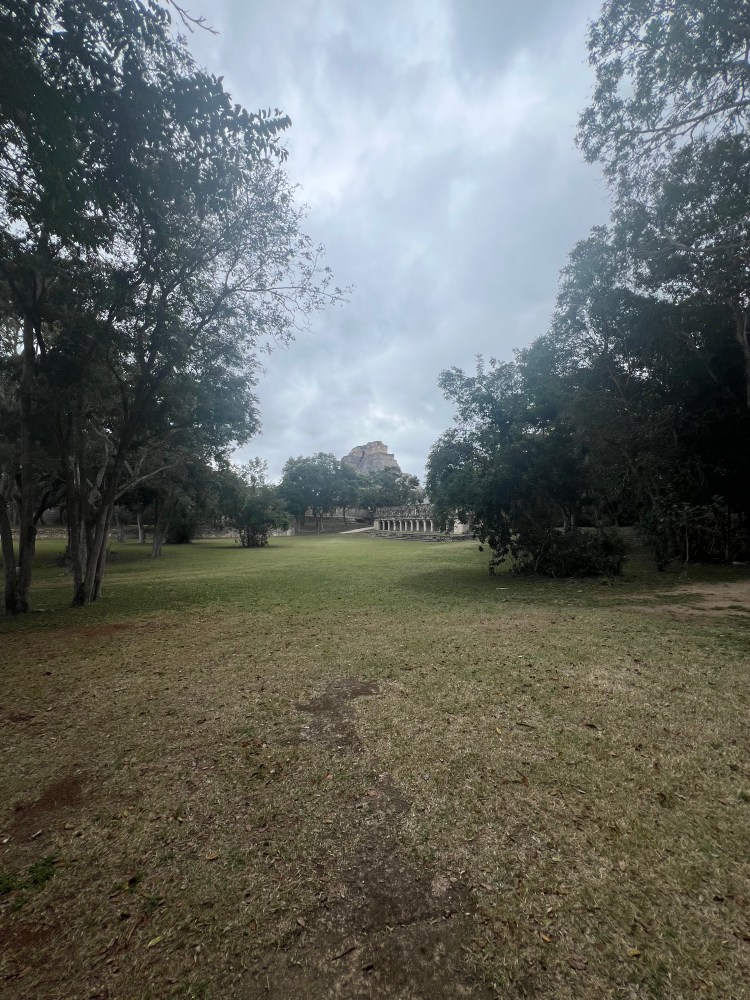
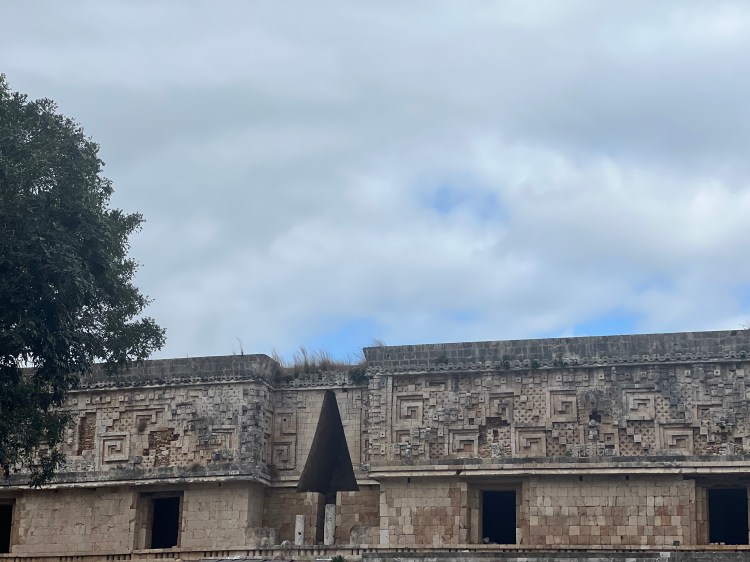
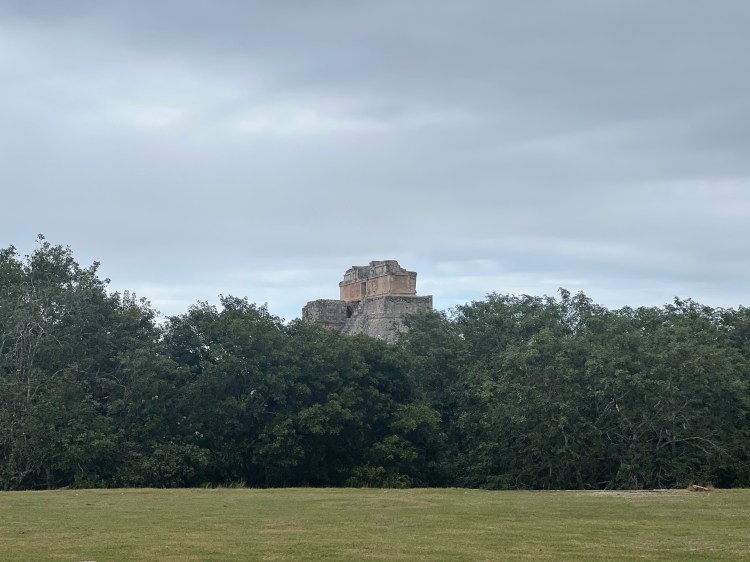
The Maya also developed advanced agricultural practices such as terracing, raised fields, and irrigation systems and established ways to use the area’s natural resources. They were responsible for trade networks connecting different regions of Mesoamerica. This not only paved the way for the trade of goods such as cacao, precious stones, and agricultural products; it also allowed for the spread of ideas, technology, and art.
I could spend hours visualizing what once was. Who lived here? Who walked this path? What were their thoughts? And it’s not just here, in this land rich in Mayan history. It’s everywhere. I wonder about my Viking roots and those who died in battle. I wonder about the Indigenous people who came before us on Treaty 6 land where I live. What happened where my house now stands? Sometimes, if you listen closely, you can hear their sighs, or the beat of the drum.
The Mayans were, and continue to be, a fascinating culture. There are many online sites full of information, but the best way to learn more about this culture is to visit it. Maybe I will see you during a celestial event in Merida! Seriously, it is a wonderful place to explore.
Note: While writing this blog, a fascinating historical discovery was made in my home province, Saskatchewan, Canada, close to the city of Prince Albert and on the Sturgeon Lake First Nation. It may have looked like “just” a piece of charcoal, but radiocarbon dating tests suggest a sample found along the North Saskatchewan River dates back about 10,700 years. It indicates a permanent settlement. The date also puts this spot up there with other ancient sites such as the Great Pyramids of Egypt, Stonehenge in England, and Göbekli Tepe in Turkey. Imagine that! Mayan records don’t come into play until around 2600 BC, although there were other civilizations before them.
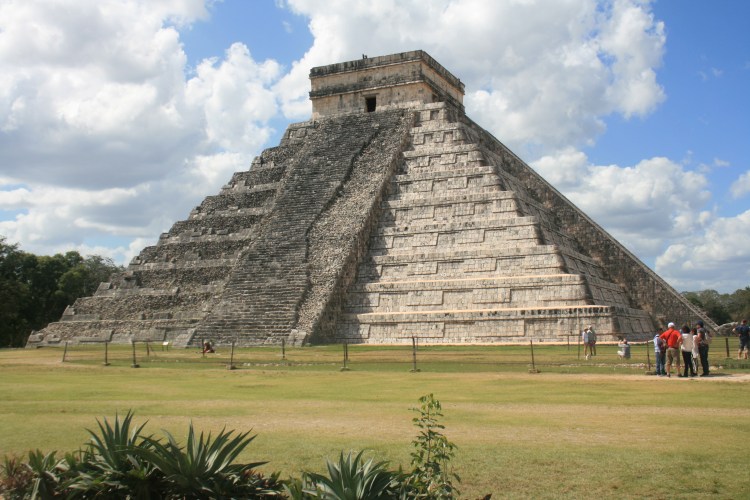
Chichen Itza: World Heritage Site; The temple has 365 steps—one for each day of the year. Each of the temple’s four sides has 91 steps, and the top platform makes the 365th. 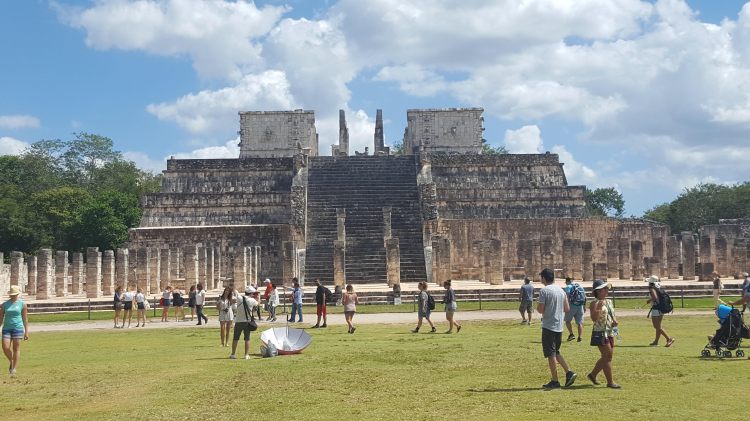
Chichen Itza is one of the Seven Wonders of the World. 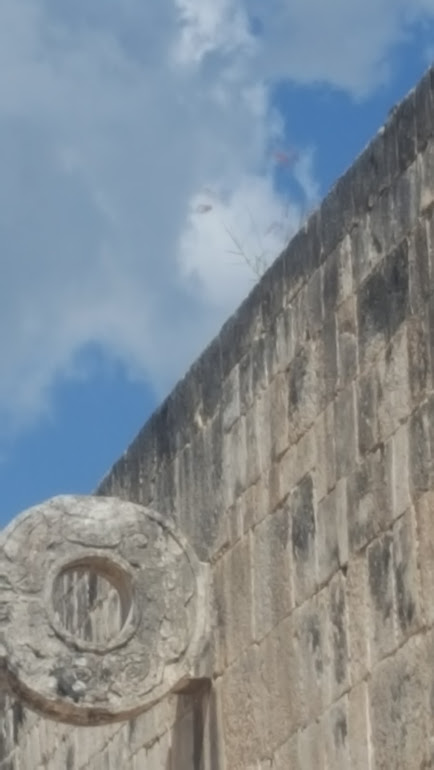
The stone hoop was used in the game Pok Ta Pok. Players used their hips to hit a rubber ball weighing around 9 lbs., through the stone hoop. It is thought by some that the winning captain of the game was used as a human sacrifice, a high honor. A reenactment of the game, minus the sacrifice, can be seen Saturday evening in Merida. 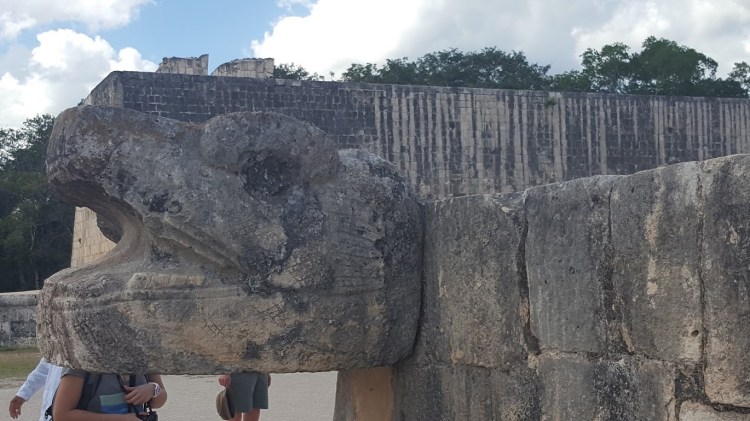
Chichen Itza had a population of 35,000 and 50,000 at any given time. It even had suburbs, or smaller homes that were built on the outskirts of the city. 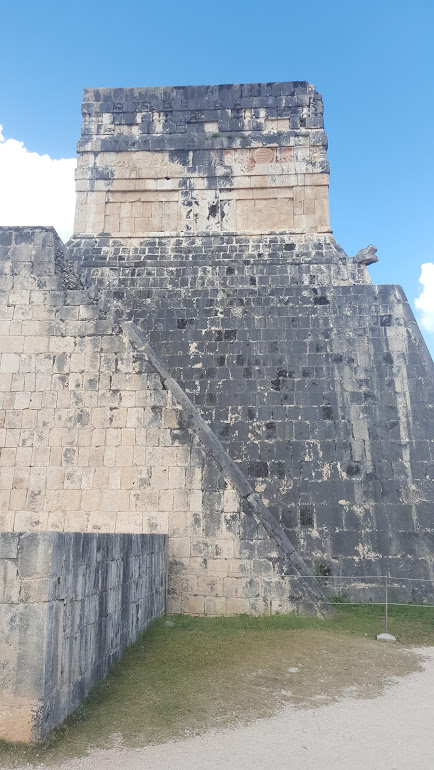
No one is sure what happened to Chichen Itza. Scientists say it mysteriously met its demise between 1000 and 1400 AD. It appears that those inhabiting the city just fled into the jungle, leaving everything behind. 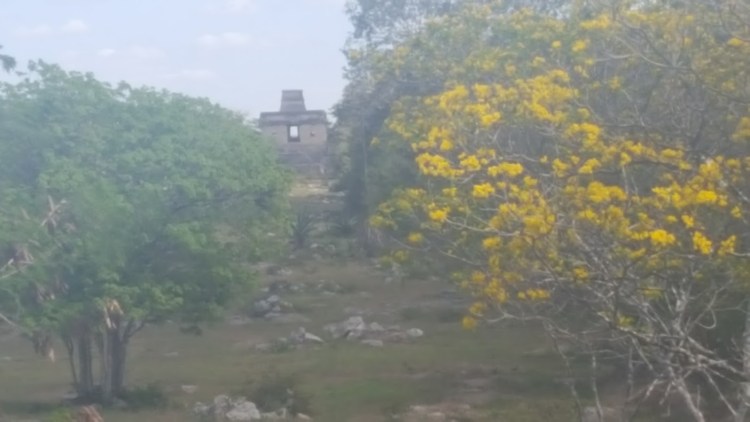
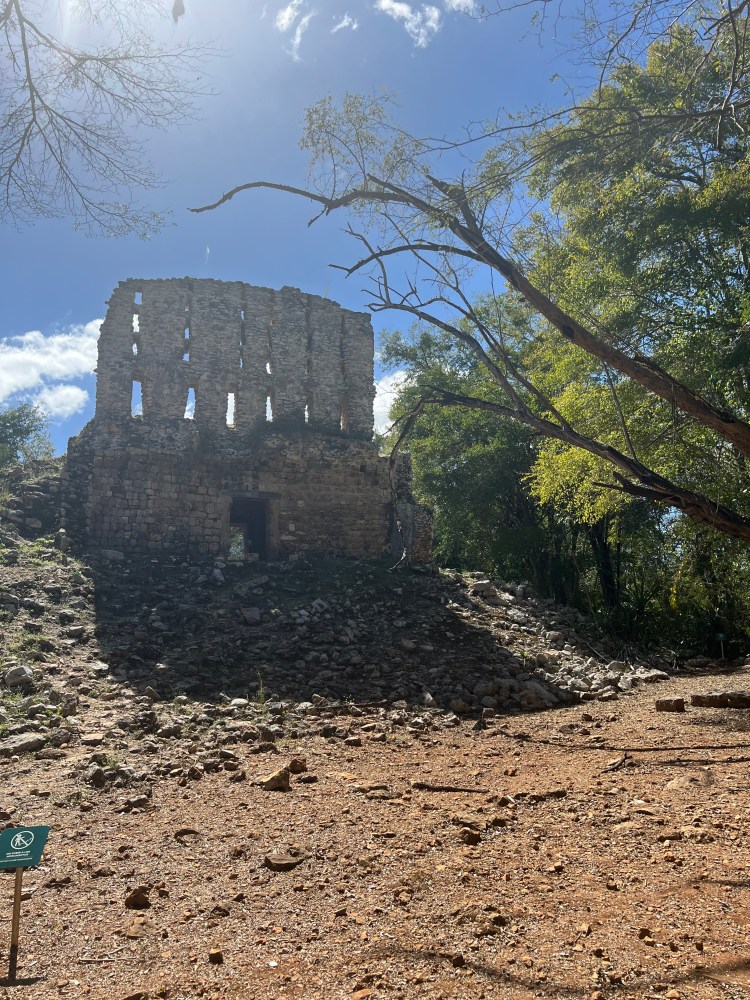
Dzibilchaltún: Dzibilchaltun is among the oldest sites on the Yucatan Peninsula dating back to as early as 500 B.C.; known for the appearance of the sun shining through the doorway of the Temple of the Seven Dolls on the spring equinox. 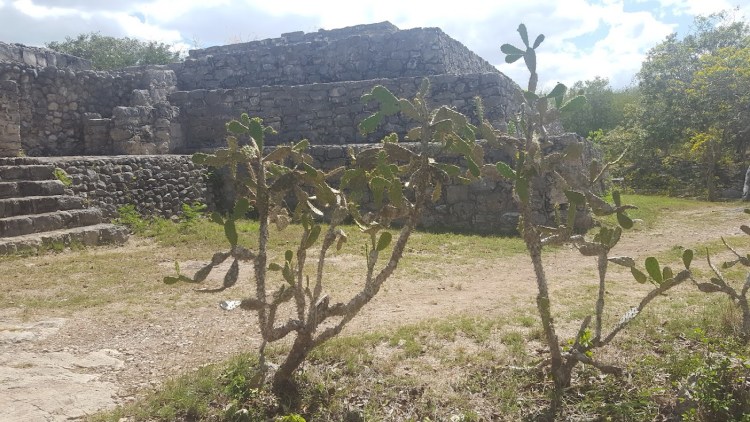
Dzibilchaltún 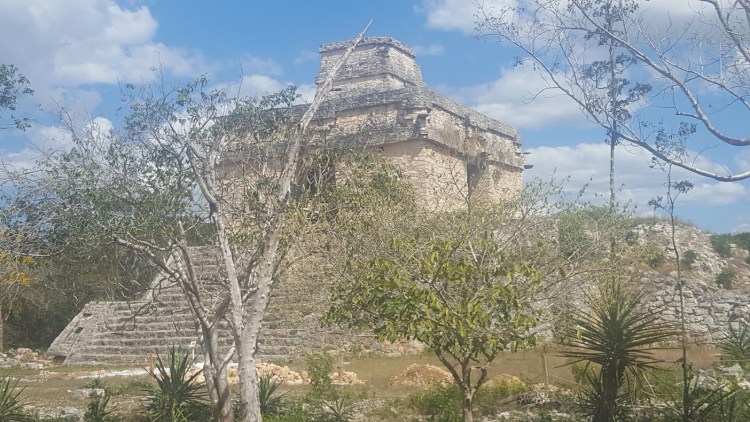
Dzibilchaltún 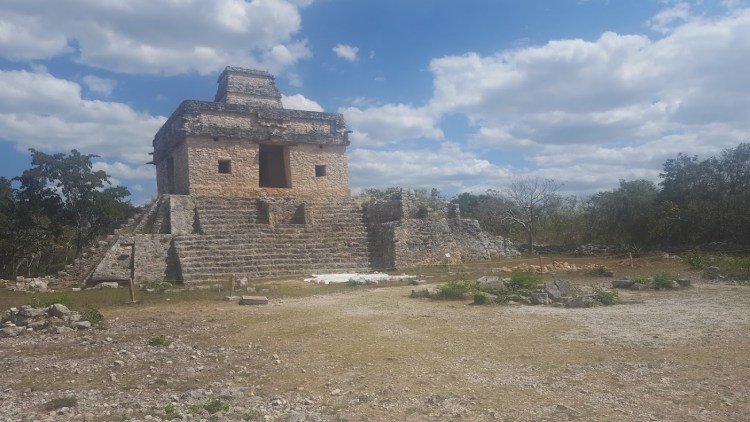
Dzibilchaltún 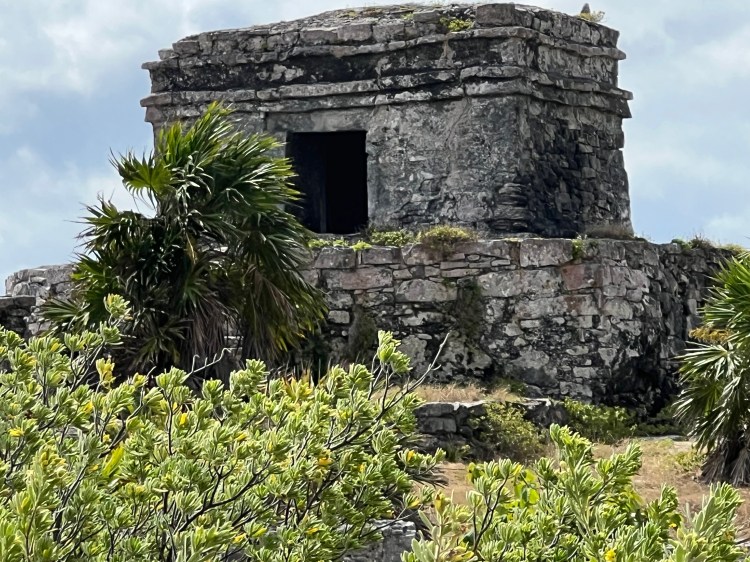
Tulum: located in the state of Quintana Roo; overlooks the Caribbean Sea 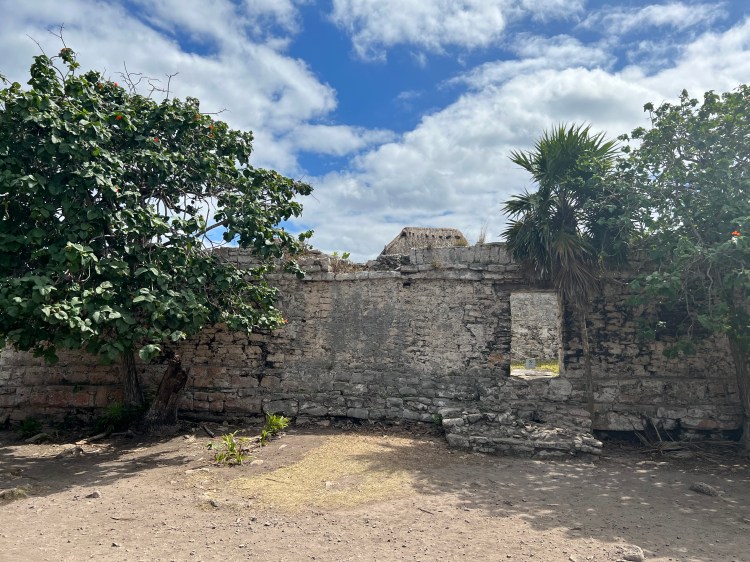
Tulum 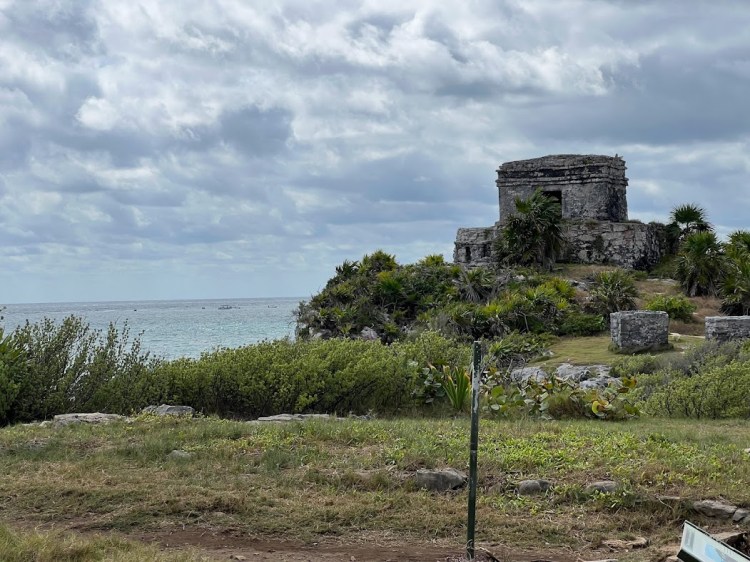
Tulum
Interesting Reads & Things
Carbon dating puts Sask. Indigenous archaeological site at almost 11,000 years old | CBC News
https://www.britannica.com/topic/Maya-people
https://www.locogringo.com/things-to-do/maya-ruins
 Wanderings Art